
What It Means to Really Learn Pilates
Joseph Pilates’ original studio looked very different from the private Pilates sessions we know today. Clients learned their order. They knew how to set up their equipment. They came in and practiced, while Joe and his teachers moved around the studio offering corrections and instruction.
There’s something about that model that I love.
Private sessions give us the opportunity for much more individual attention, but I don’t think we should lose the self-sufficiency that was built into the original method.
Knowing where you are going next. Learning how to set up your Reformer. Understanding why we use a particular spring. Recognizing the principles of the method rather than simply following instructions.
You don’t learn all of this at once. It develops over time.
And the teacher is still very much teaching—watching, correcting, refining and helping you make new connections. But as the client becomes more familiar with the work, there is a shift. Pilates starts to belong to them.
That, to me, is part of really learning the method.
Here are some benefits:
Creates flow — knowing the order allows the workout to move continuously, which is an important part of Classical Pilates.
Deepens concentration — you’re actively participating rather than simply following instructions.
Develops body awareness — you learn to recognize your own positioning, alignment, effort, and movement patterns.
Creates ownership — Pilates becomes your practice, not something a teacher does to or for you.
Allows the teacher to teach at a deeper level — instead of spending the session repeatedly directing setup and sequence, the teacher can focus on refinement, connections, and helping you progress.
If you want to learn more about Joesph Pilates and his exercise method here is an amazing book he wrote. https://a.co/d/0hFwz6B5
I have written many more Pilates articles that I put up on my website.
The Six Principles of Pilates: Why the Exercises Are Only Half the Story
When people think of Pilates, they often think of a series of exercises. While the exercises matter, what truly transforms the body is how they are performed.
Joseph Pilates called his method Contrology because he believed that mindful movement creates lasting change. Over time, Pilates educators identified six guiding principles that help bring his work to life.
Whether you’re new to Pilates or have practiced for years, these principles are what separate movement from meaningful movement.
1. Centering
Every movement begins from your center—what Joseph Pilates referred to as the powerhouse.
The powerhouse includes the abdominals, back, hips, and pelvic floor. Rather than tightening everything as hard as possible, the goal is to create an organized center that supports movement throughout the body.
A strong center allows the arms and legs to move with greater freedom, stability, and efficiency.
2. Concentration
Pilates asks you to be present.
Instead of exercising on autopilot, you learn to notice how your body is moving. Small adjustments in awareness often create the biggest improvements.
Quality of attention produces quality of movement.
3. Control
Control is the foundation of Contrology.
Rather than relying on momentum, each movement is guided with intention. This develops strength, coordination, balance, and confidence while reducing unnecessary strain.
The goal isn’t to do more repetitions—it’s to perform each repetition well.
4. Precision
Every exercise has a purpose.
The placement of your hands, feet, head, pelvis, and spine all influence how the exercise works. Precision doesn’t mean perfection—it means understanding what you’re trying to accomplish with each movement.
Often, a small correction produces a completely different experience.
5. Breath
Breathing is more than simply taking air in and out.
The breath supports movement, encourages efficient muscle recruitment, and helps create rhythm throughout the body. Coordinating breath with movement often allows unnecessary tension to soften while improving stability where it’s needed.
6. Flow
Pilates is designed to move.
Exercises connect together in a continuous rhythm rather than feeling isolated or mechanical. As strength, coordination, and understanding improve, movement becomes smoother, more graceful, and more efficient.
Flow is often where the method begins to feel effortless—even though you’re working hard.
The Principles Work Together
These six principles aren’t separate skills to master one at a time. They work together in every exercise.
You can’t have precision without concentration.
Control depends on centering.
Flow is supported by breath.
When these principles come together, Pilates becomes more than a workout—it becomes a way of moving through life with greater ease and awareness.
At my studio, I use these principles to guide every session, adapting them to each client’s body while remaining true to the classical method. The goal isn’t simply to complete an exercise. The goal is to help you move better, feel stronger, and carry that quality of movement into everyday life.
The Pilates Principle Control.
The Pilates Principle of ControlControl is at the heart of Pilates. It is not about tension or rigidity, but about focused, intentional movement throughout the entire session.True control depends on other Pilates principles—especially centering, concentration, and precision. Centering allows us to find symmetry and stability. We initiate movement from our center, using it to organize the body and control the equipment rather than react to it. When the center is active, strength feels supported and balanced.Control also requires full concentration.
Pilates asks for complete focus—not just for a moment, but for the entire 55-minute session. Staying present allows us to manage the springs, maintain alignment, and move with awareness from start to finish.Precision and control are inseparable. Control allows movement to be precise, and precision keeps movement controlled. Every detail matters—the placement of the body, the pathway of movement, and the transitions between exercises.At its core, control is intentional movement. Each exercise and each transition is performed with purpose, creating strength, clarity, and ease that extend beyond the studio and into everyday life.If you want it even tighter (almost a “micro blog”), or slightly warmer/more client-facing, I can trim it one more notch without losing meaning.
Train Smarter: Pilates for Men
Pilates is a strength and conditioning system, not just stretching. It builds deep core strength, improves posture, and supports healthy joints—making it ideal for men who want to move better, train smarter, and stay injury-free.
Through controlled, precise movement, Pilates develops power, balance, and mobility without strain. Many men are surprised by how challenging the work is, especially on the Reformer and Chair, where strength and control are essential.
Pilates isn’t about flexibility alone.
It’s about strength, efficiency, and longevity.
Why Winter Is the Perfect Time to Start (or Restart) Pilates in Westport, CT
As the days get shorter and the temperatures drop, our bodies naturally become tighter, slower, and less motivated to move. Winter is when many people feel lower energy, more stiffness—especially in the spine and hips—and a general sense of “heaviness.”
This is exactly why winter is one of the best seasons to begin, return to, or deepen your Pilates practice.
At Jennifer Pollack Pilates in Westport, CT, I work privately with each client to restore alignment, strengthen the core, and improve circulation—all things the body craves during the colder months.
1. Winter Creates Stiffness—Pilates Restores Warmth and Mobility
Cold weather causes muscles to contract and joints to feel compressed. This is why so many people notice:
tight hip flexors
stiff lower backs
hunched shoulders
slower circulation
more fatigue
Classical Pilates is a whole-body system that warms the body from the inside out, creating heat through breath, core activation, and dynamic movement. Even beginners feel more open and energized after just one session.
2. Pilates Helps Counteract Seasonal Fatigue
Shorter daylight hours and more time indoors can affect mood and energy levels.
Pilates helps by:
improving circulation
stimulating breath
strengthening the deep core
supporting posture (which affects energy!)
boosting mental focus
Many clients tell me they feel both calmer and more energized after their sessions—especially during the winter months.
3. It’s the Ideal Time to Build Strength Before Spring
Winter is a natural “reset” moment. Starting Pilates now helps you build:
foundational core strength
better alignment
flexibility
balanced musculature
injury-resistant movement patterns
By spring, you feel lighter, stronger, and better prepared for an active season.
4. Private Pilates Allows You to Start Exactly at Your Level
Whether you’re recovering from an injury, returning after time away, or curious about beginning Pilates for the first time, private sessions allow me to tailor your work to your body’s needs.
My Westport studio features classical Gratz equipment including the Reformer, Tower, Wunda Chair, and Ladder Barrel—each designed to support precision, control, and safe progression.
5. Winter Self-Care Isn’t a Luxury—It’s a Necessity
This is the season when our bodies need the most mindful movement.
A weekly or twice-weekly Pilates practice can help:
ease joint stiffness
improve sleep
reduce travel tightness (holiday flights take a toll!)
support mental clarity
reduce back or hip pain
improve circulation and posture
Even one session a week can make a meaningful difference in how you feel all season long.
Ready to Start?
I offer:
✓ Private 1:1 Pilates sessions on classical equipment
✓ Intro 3-session package for new clients
✓ A calm, supportive environment in Saugatuck / Westport, CT
To book your first session, visit JenniferPollackPilates.com or send me a message—I'd love to help you feel strong, aligned, and energized this winter. Schedule a session
🧘♀️ How Pilates Strengthens Your Core and Improves Posture
At Jennifer Pollack Pilates in Westport, CT, every session is designed to strengthen your core — the powerhouse of your body. Pilates isn’t just about doing “ab work.” It’s a full-body system that connects your breath, alignment, and deep stabilizing muscles to create lasting strength from the inside out.
1. Pilates Builds Deep Core Stability
Unlike traditional crunches that focus on surface muscles, Classical Pilates strengthens the deeper layers — the transversus abdominis, pelvic floor, and multifidus — which support your spine and pelvis. These are the muscles that keep your body stable and balanced in daily life.
2. Pilates Improves Postural Alignment
Through mindful movement and control, Pilates helps retrain your posture. You’ll learn how to lift through your center, lengthen the spine, and move with symmetry. Over time, this awareness reduces tension in the neck, shoulders, and lower back — a common issue for anyone sitting at a desk or driving.
3. Pilates Connects Strength With Breath
Your breath fuels every exercise. When you breathe laterally (into the ribs), your core muscles naturally engage. This connection between movement and breath builds endurance, reduces stress, and supports a strong, supple spine.
4. Personalized Core Work for Every Body
Whether you’re in a Private Pilates session or a Reformer Pilates class, exercises are tailored to your needs. Some clients focus on stability after injury; others want to enhance athletic performance. Each session is a mindful progression toward balance and strength — no wasted motion.
5. Lasting Benefits Beyond the Studio
A stronger core means better movement in everyday life — lifting groceries, climbing stairs, or even standing taller. Clients at Jennifer Pollack Pilates in Westport often notice improved confidence, balance, and energy within just a few sessions.
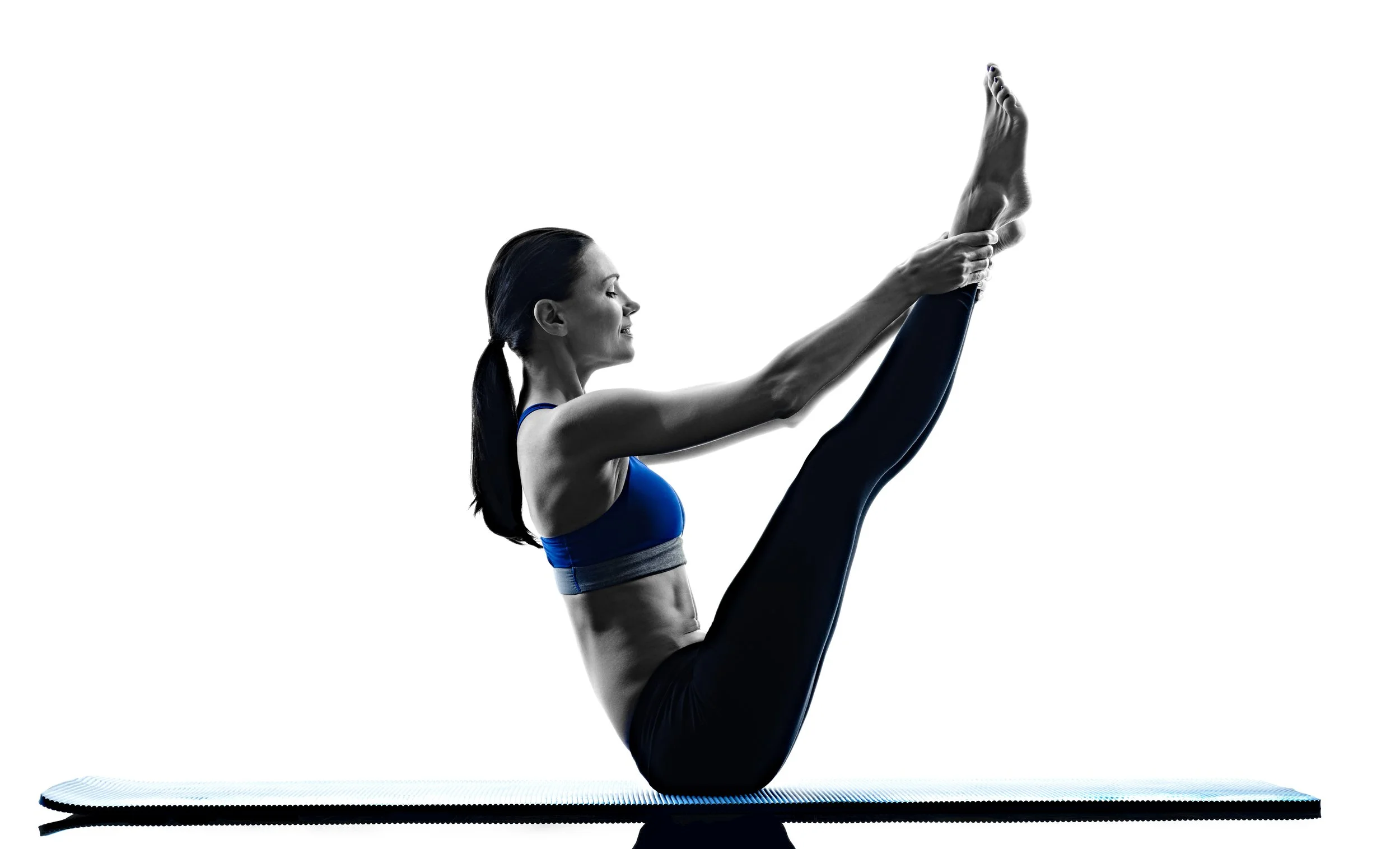
TEASER ON THE MAT
Woman performing the Pilates Teaser on a mat at Jennifer Pollack Pilates in Westport, CT — balancing on sit bones with legs lifted and arms reaching toward feet, demonstrating core strength and control.”

Why Choose a Private Pilates Session in Westport, CT?
Jennifer Pollack Pilates has 29 years experience teaching Pilates in Westport, CT.
When you search Pilates Westport CT or Pilates Westport, you’ll see plenty of group mat classes. While mat work is a great introduction, private Pilates sessions offer unique benefits that help you progress faster, move more safely, and truly understand the Pilates method.
1. Individual Attention
In a private session, every cue and correction is tailored to you. This means safer movement, faster learning, and support for injuries or post-rehab needs.
2. Access to Classical Apparatus
Unlike mat classes, private sessions in my Westport studio use the Reformer, Tower, and Wunda Chair. These classical Pilates tools create resistance and support, helping you strengthen and align more effectively.
3. Faster Progress & Flexibility
Private instruction adapts to your goals—whether it’s posture, pain relief, or athletic performance. Sessions are also scheduled at times that work best for you, not a fixed class calendar.
Why Work With Jennifer Pollack Pilates?
As a classically trained instructor with 25+ years in movement education, I teach Pilates as Joseph Pilates intended: precise, systematic, and transformative.
📍 Jennifer Pollack Pilates, 25 Sylvan Rd S, Westport, CT
📞 203-841-6171 | 🌐 jenniferpollackpilates.com
Pilates vs. Yoga: What’s the difference?
It all begins with an idea.
Pilates and yoga are often mentioned in the same breath, and for good reason. Both are mind–body practices that focus on strength, flexibility, breath, and alignment. But while they share some similarities, each discipline has its own unique history, purpose, and approach. Understanding these differences can help you decide which is right for you—or how to combine them for the best results.
Origins and Philosophy
Yoga
Yoga originated in India over 5,000 years ago as a spiritual practice. Rooted in philosophy, meditation, and breathwork, yoga was designed to unite body, mind, and spirit. Today’s yoga classes vary widely—from gentle restorative yoga to vigorous power yoga—but the common thread is the connection of breath with movement and an emphasis on mindfulness.Pilates
Pilates is much more recent. Developed in the early 20th century by Joseph Pilates, it was originally called Contrology. His method focused on strengthening the body, correcting posture, and rehabilitating injuries. Pilates is exercise-first, designed to create efficient, balanced movement through core strength, alignment, and precision.
Movement Style
Yoga
A yoga class typically includes flowing sequences or held postures, often designed to open, stretch, and calm the body. Breath guides the pace, and poses may be linked together in a meditative rhythm.Pilates
Pilates exercises are structured with deliberate precision. Each movement begins with the core—what Pilates called the “powerhouse.” Whether on the mat or specialized equipment like the Reformer and Tower, Pilates emphasizes stability, control, and efficient muscle engagement.
Breathwork
Yoga
In yoga, breath is central. Practices like pranayama (breath control) are used to calm, energize, or balance the body and mind. Breath often moves in harmony with postures.Pilates
Pilates uses lateral ribcage breathing. The focus is on expanding the lungs side-to-side while keeping the core engaged. This creates space in the body, supports deep abdominal activation, and helps coordinate movement.
Benefits
Yoga
Improves flexibility and balance
Encourages stress relief and relaxation
Builds mindfulness and mental clarity
Pilates
Builds core strength and postural alignment
Improves movement efficiency and body awareness
Supports injury prevention and rehabilitation
Do You Have to Choose?
The beauty is—you don’t! Yoga and Pilates complement each other beautifully. Yoga can enhance flexibility, relaxation, and mindfulness, while Pilates strengthens your core, corrects posture, and refines movement. Many people find that blending both creates a balanced routine for body and mind.
✅ If you’re in Westport, CT, you can explore classical Pilates training at Jennifer Pollack Pilates. Whether you’re new to movement or an experienced practitioner, Pilates will give you strength and alignment that enhances not only your yoga practice, but all of life’s daily activities.